
Latest Story
Dink Like a Pro: Mari Humberg’s 5-Step Footwork System for Kitchen Control
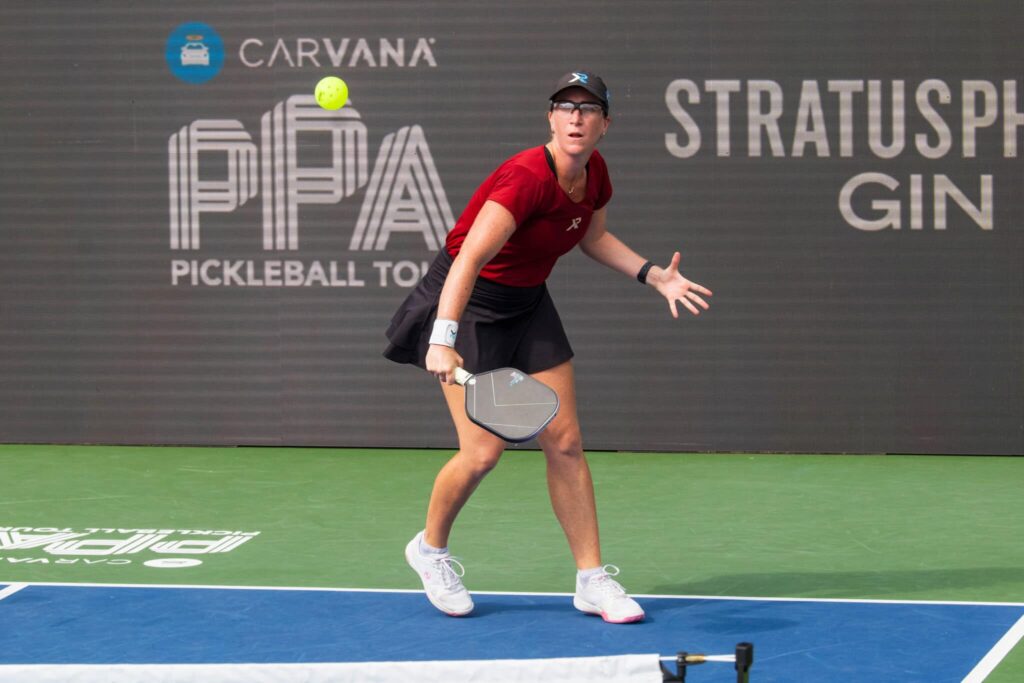
Every dink starts with your feet. Learn Mari Humberg’s five steps to own the kitchen like a pro.
Master consistent footwork before and after every dink—stay low, move fast, and close the middle gap like a pro.
In a recent pro match, Mari Humberg found herself locked in a fast kitchen exchange against two aggressive opponents. One misstep could’ve ended the rally. Instead, she dropped low, sliced a controlled dink, and immediately slid back to close the middle. The point ended with her signature poach finish—and a reminder that in pickleball, footwork never takes a break.
Dinking isn’t a rest phase—it’s a footwork drill in disguise. Whether you’re 3.0 or 5.0, consistent lower-body movement before and after each shot defines how long you stay in control. Mari’s five-step approach will help you move, recover, and win the dink battle with precision.
Step 1: Get Low, Stay Low
Before the ball crosses the net, drop into your athletic stance—knees bent, hips back, paddle in front, weight on the balls of your feet. Humberg often says, “Lower than you think.” Standing upright during dinks is a silent error that invites attack. Staying low keeps your reaction quick and paddle angle stable.
Footwork cue: One shuffle in, one bounce, then split-step as your opponent makes contact.
Step 2: Track the Ball, Move Your Feet
Keep your paddle in front and move your feet so contact happens near your front knee, not off to the side. If you’re reaching, you’re already late. Mari’s signature slice dink relies on micro footwork—tiny sidesteps that maintain balance and shot options.
Footwork cue: Move → Set → Contact.
Step 3: Dink, Then Slide to the Gap
After each dink, recover toward the middle gap between you and your partner. This closes holes and re-centers your positioning. Humberg emphasizes “finish your shot, then find the middle.” The next ball often comes there first.
Footwork cue: Push off your outside leg and take one or two controlled slides toward center immediately after contact.
Step 4: Hover, Cover the Middle, Stay Engaged
Holding the center gap is pro-level discipline. Don’t plant—hover in motion. Mini-shuffle left and right to maintain coverage and prepare for any speed-up. The middle wins more rallies than sidelines. And never, ever stand tall just because the rally feels “soft.”
Footwork cue: Constant micro-movement and weight on toes to keep reaction time sharp.
Step 5: Reset—Don’t Stand Up
After each exchange, re-set your stance: knees bent, weight forward, paddle in front. Many players unconsciously stand up after a dink, losing readiness. Mari rarely straightens—she bounces, re-centers, and stays coiled.
Footwork cue: After sliding to center, take a short drop step, split-step as opponent contacts, and prepare for the counter.
Why It Matters
At the top level, dinking isn’t about patience—it’s about precision under motion. Lazy footwork creates pop-ups. Good footwork buys time and balance. Mari’s method blends control and aggression: stay low, stay in motion, and reclaim the middle every time you touch the ball.
Practice Drill: “Slow In – Quick Over” (10 minutes)
- Pair up at the kitchen line; one player feeds steady dinks.
- After each contact, slide one step to center gap.
- Every third ball, attack softly, then recover low again.
- Repeat for 1-minute intervals, focusing on movement rhythm, not speed.
- Switch sides and repeat for 5-minute sets.
Bring It to Life
You’re trailing 8–9. The opponents pull you wide with a cross-court dink. You drop low, move your feet, and send a soft reply. Instantly you slide to close the middle. The next ball floats high—you’re already there. One quick drive through the seam and the point is yours. Movement made the difference.
Question: The next time you’re dinking at the kitchen, will you hit and stand—or hit, move, and own the gap?